
Key Takeaways
- Shared meals naturally spark conversation and create opportunities for connection.
- Consistent dining routines can bring structure and familiarity to the day.
- Community dining looks different across independent living, assisted living, and memory care.
- Small steps can help a loved one feel at ease in a communal dining setting.
- Dining spaces can become familiar gathering places where residents get to know one another over time.
The Power of a Seat at the Table
Think about the last time a shared meal made you feel at home. Maybe it was the laughter, a familiar dish, or simply having someone to talk to. Shared meals can continue to provide those moments of connection as we age.
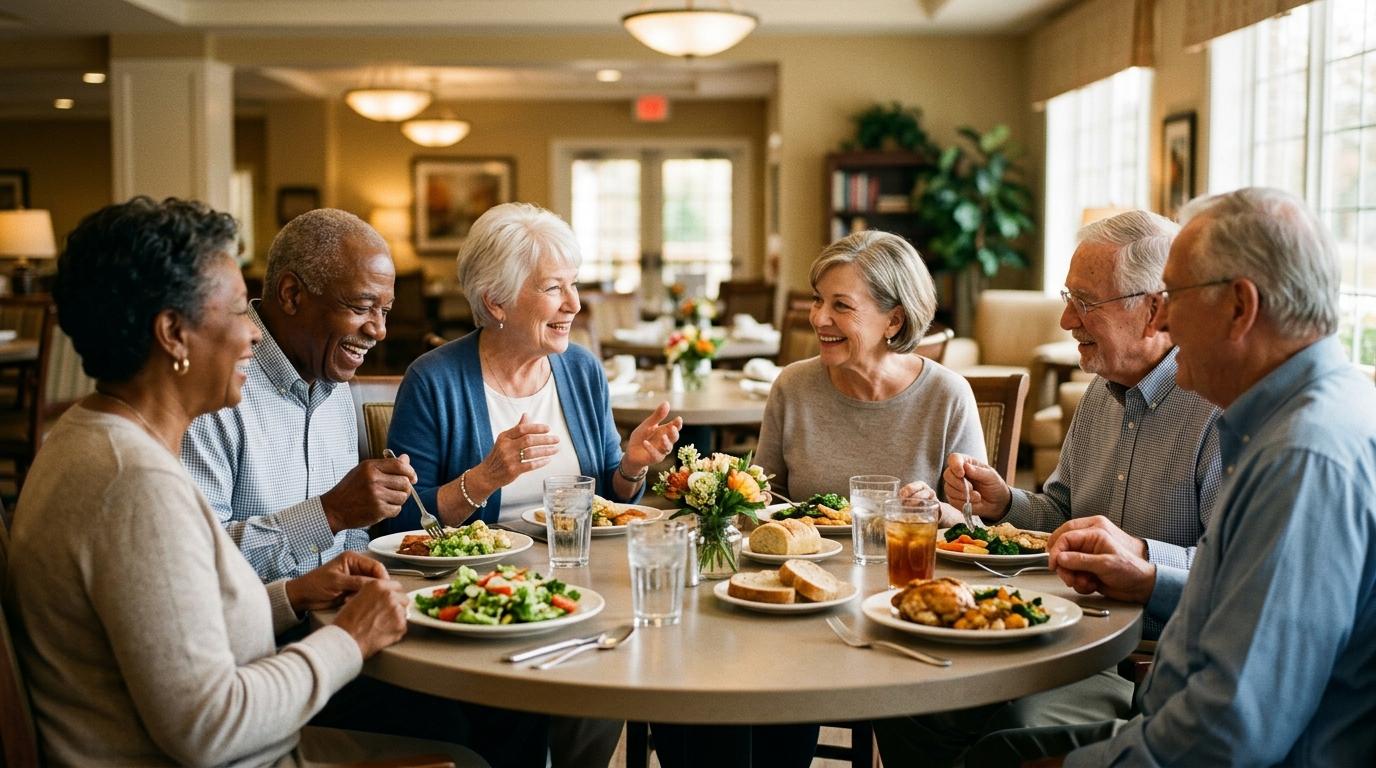
In senior living communities, dining together can be a natural way to build connections and a sense of belonging. It’s not just about the food on the plate. It’s about the people gathered around the table.
Why Shared Meals Matter
Sitting down together gives people a natural opportunity to talk. Conversations start easily over a warm bowl of soup or a slice of fresh-baked bread. For residents in a senior living community, mealtimes can be a highlight of the day, something to genuinely look forward to.
Loneliness is something many older adults face, especially during big life transitions. Shared meals can create regular opportunities for connection. Seeing familiar faces every morning at breakfast or every evening at dinner creates a quiet kind of comfort that adds up over time. Those small, repeated moments can gradually lead to new friendships.
How Dining Shapes Daily Life in Senior Living
Routine & Rhythm at the Table
Having a consistent mealtime schedule gives the day a natural shape. Consistent mealtimes give residents something to look forward to. That kind of rhythm can add structure and familiarity to the day. It’s a simple anchor that helps each day feel grounded.
Over time, the people you share those meals with become familiar and comforting. That neighbor who always sits by the window, the friend who knows exactly how you take your coffee. Those small details build the kind of warmth that makes a place feel like home. A look at the monthly activity calendar shows just how many opportunities there are to connect beyond the dining table, too.
Conversations that Build Connections
Dining spaces in senior living communities naturally become gathering spots. Before the food even arrives, people are chatting, catching up, and sharing stories. Meals can naturally lead to conversations about memories, traditions, and shared experiences.
Food is tied to identity, culture, and history. When someone shares a memory about their grandmother’s cooking or a holiday tradition, it opens a door. Those conversations can help residents get to know one another beyond everyday small talk.
How Shared Meals Support Well-Being
Nutritious meals are an important part of supporting health as we age. Nutritious meals are an important part of supporting health as we age. Sharing those meals with others also creates another opportunity for conversation and connection throughout the day. Healthy nutrition habits can support overall well-being as you age.
Feeling connected at mealtime also supports a sense of purpose. Knowing someone saved you a seat, or that your presence at the table matters, is a small but powerful thing. In both independent living and assisted living, that sense of belonging can support a fuller, more engaged daily life.
Community Dining Across Levels of Care
Independent Living
In independent living, you set your own pace. Dining can be a social part of the day, whether you’re catching up with a neighbor over coffee or sharing lunch with friends. The dining room can become a familiar gathering place where residents connect on their own terms.
Shared meals also make it easier to connect naturally without having to plan a separate social activity. You might see the same neighbors at breakfast, meet someone new over lunch, or make plans to attend an activity together afterward.
Assisted Living & Memory Care
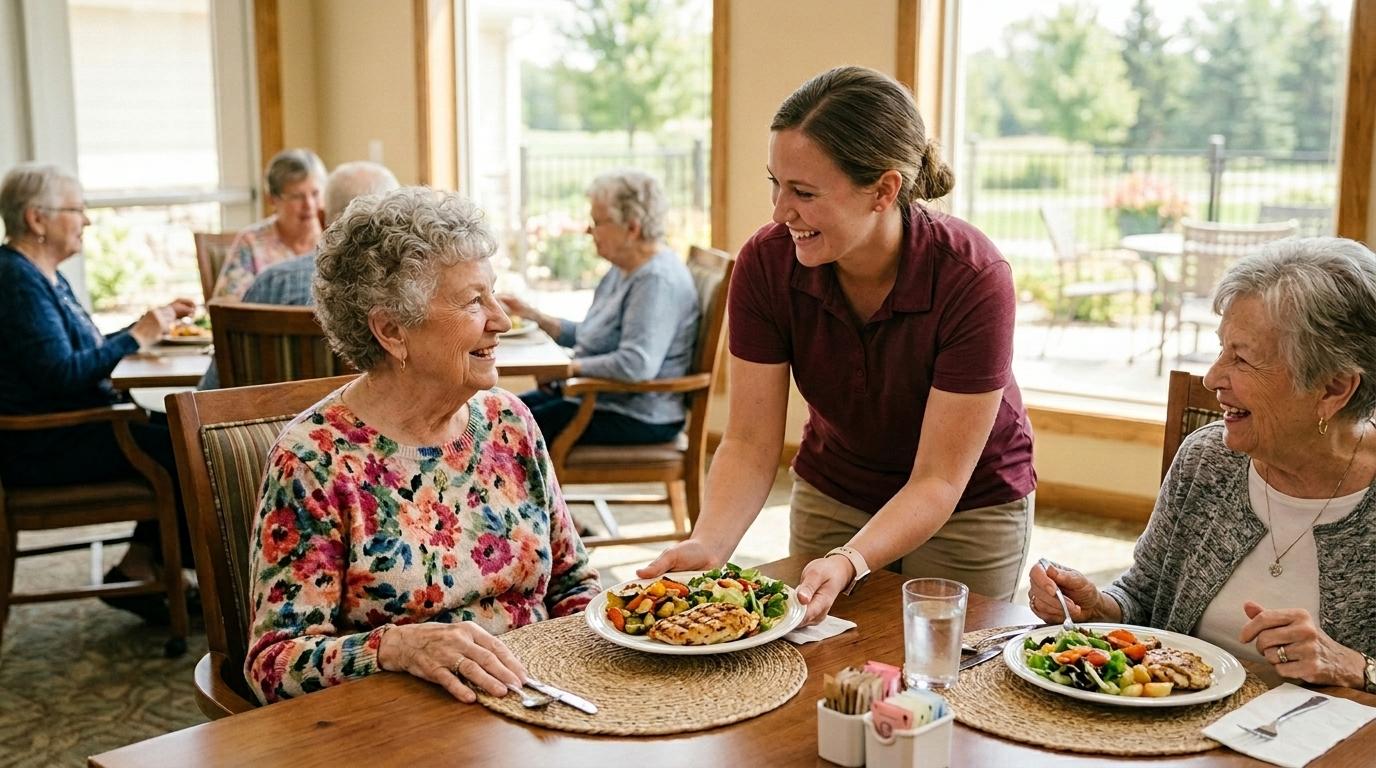
For residents in assisted living and memory care, mealtime support can be tailored to each person’s needs. Staff get to know each person’s preferences, traditions, and needs so that dining stays a positive, comfortable experience. Team members can get to know each person’s preferences, traditions, and needs to help make dining a comfortable part of their routine.
For memory care residents, consistent routines, familiar surroundings, and recognizable faces can help create a comfortable mealtime experience.
How to Help a Loved One Embrace Community Dining
If your loved one is hesitant about communal dining, give them time to get comfortable with the experience. Big tables and new faces can feel like a lot at first. Starting small, like a quiet breakfast with just a few neighbors, can ease the transition without any pressure.
Encourage them to look for a familiar face and sit nearby. And take a moment to let the staff know about your loved one’s food preferences, dietary needs, or favorite dishes from home. Sharing these details can help staff get to know your loved one’s preferences. The benefits of community living go far beyond the dining room, and this is a meaningful first step into all of them.
Building Connection Beyond the Dining Table
A shared meal can be one of the simplest ways to connect. A conversation over lunch, a familiar face across the table, or an invitation to sit together can gradually turn everyday mealtimes into meaningful friendships.
At Fairway Pines Senior Living, residents have opportunities to connect throughout the day through shared activities, welcoming spaces, and time spent with neighbors. These everyday interactions help create a community where people can build relationships at their own pace.
Contact us to learn more about life in our community.